Vinyl plank flooring has become the default choice across new construction, rental communities, and home remodels throughout Des Moines and Central Iowa, and for good reason. It holds up to Iowa’s seasonal humidity swings, stands up to heavy foot traffic, and delivers a clean wood-look finish at a fraction of the cost of hardwood.
But not all LVP is the same, and the wrong choice on a 40-unit development or a 2,500-square-foot custom home can mean callbacks, early replacement, and unhappy owners. This guide cuts through the confusion. We cover the core types of vinyl plank flooring, what specs actually matter for Iowa projects, what it costs in Des Moines in 2026, and how to source it reliably for new builds, multifamily developments, and renovations.
Luxury vinyl plank, or LVP, is a multi-layer synthetic flooring product designed to replicate the look of hardwood planks. Modern LVP is built from several bonded layers: a backing layer for stability, a rigid or flexible core, a printed design layer that mimics wood grain, and a clear wear layer on top that determines how long the floor will hold up to daily use.
For builders, contractors, and developers working across Des Moines, Ankeny, Waukee, and West Des Moines, LVP checks the boxes that matter most on a project:
The market has evolved significantly. Classic flexible LVP has largely been phased out of the premium segment. Today, when flooring suppliers and contractors refer to LVP, they almost always mean one of two rigid-core variants: SPC or WPC.
Understanding the difference between SPC and WPC is the single most important product knowledge for anyone sourcing LVP for Iowa projects. These two core types have different compositions, different strengths, and different ideal use cases.
SPC flooring has a core made from a dense blend of limestone powder and PVC. It is the industry’s current default for most residential and light commercial applications. The stone-based core makes it extremely rigid — it will not dent under heavy furniture, resists movement in temperature fluctuations, and stays flat over time. For Iowa projects where basements, high-traffic living spaces, and rental units need flooring that performs for years without issues, SPC is the standard recommendation.
• Material cost in 2026: $2.50 – $5.00 per square foot
WPC flooring uses a foamed wood-fiber core, which makes it slightly softer and warmer underfoot than SPC. It absorbs sound better, which can matter in multistory multifamily buildings where IIC (Impact Isolation Class) ratings come into play. The tradeoff is that WPC is slightly less dense, more susceptible to indentation under very heavy loads, and typically costs more.
• Material cost in 2026: $3.00 – $6.00 per square foot
Quick reference: SPC vs. WPC for Iowa builders
Factor | SPC | WPC | Best for Iowa? |
|
Waterproof | Yes | Yes | SPC (basements) |
|
Temp. stability | Excellent | Good | SPC |
|
Dent resistance | Very high | Moderate | SPC (rentals) |
|
Foot comfort | Firm | Softer | WPC (bedrooms) |
|
Sound absorption | Moderate | Better | WPC (multistory) |
|
Material cost/sq ft | $2.50–$5.00 | $3.00–$6.00 | SPC (value) |
|
Best application | New const./rentals | Bedrooms/comfort | See notes |
|
2026 pricing based on mid-range product tiers. Bulk contractor pricing varies by volume and supplier.
The wear layer is the clear protective coating on top of the plank. It is measured in mils (thousandths of an inch), and it is the single number that most directly predicts how long the floor will hold up to daily use. Choosing the wrong mil thickness for the application is one of the most common and costly mistakes in LVP sourcing.
• 6–8 mil: Budget entry-level. Appropriate only for low-traffic bedrooms or very short-term rental turnover. Not recommended for Iowa new construction.
• 12 mil: Standard residential grade. Works for light-to-medium traffic in owner-occupied homes. Minimum acceptable spec for rental units.
• 20 mil: The standard for quality Iowa new construction and rental projects. Handles heavy foot traffic, pets, and rolling furniture. This is the sweet spot for most builders and developers.
• 28+ mil: Light commercial grade. Used in retail, offices, and high-turnover rental communities where floor longevity across multiple tenant cycles matters.
For multifamily and rental developments across Des Moines and Central Iowa, a 20-mil SPC product is the minimum standard that experienced builders and developers specify. It significantly reduces flooring-related callbacks and replacement cycles between tenants.
LVP pricing in Des Moines in 2026 varies significantly by product tier, core type, wear layer, and sourcing channel. Here is a realistic breakdown for builders and developers budgeting projects this year:
Full installed cost, including materials, professional labor, underlayment, and transitions, runs $4.06 to $11.32 per square foot for Des Moines projects in 2026, according to local contractor data. For budgeting on larger projects, most experienced Iowa contractors plan at $5 to $8 per square foot for a quality mid-range SPC product with standard installation.
On multifamily developments and large single-family home communities, volume pricing through a dedicated supplier can reduce material costs meaningfully compared to individual retail or big-box sourcing. Locking in pricing for an entire development at the planning stage also removes the risk of mid-project cost increases, which have been significant in 2025 and early 2026 due to tariff-driven material price volatility.
Key additional costs to budget:
For new builds in Central Iowa suburbs, a 20-mil SPC product is the go-to recommendation. Warm-tone wood-look finishes in blonde oak, medium brown, and greige have been the most in-demand colors for Iowa spec homes in 2025–2026. Wide plank formats (7 inches and up) are increasingly expected by buyers in move-up and premium price points.
Multifamily properties have specific requirements that differ from owner-occupied homes. Durability across multiple tenant cycles, ease of individual plank repair, and consistency of finish color across large orders are all critical. For properties like townhome and apartment communities across West Des Moines, Ankeny, and the growing Waukee corridor, a consistent SPC core LVP with a 20-mil wear layer, specified in one or two neutral colorways across all units, is standard practice for developers managing long-term operational costs.
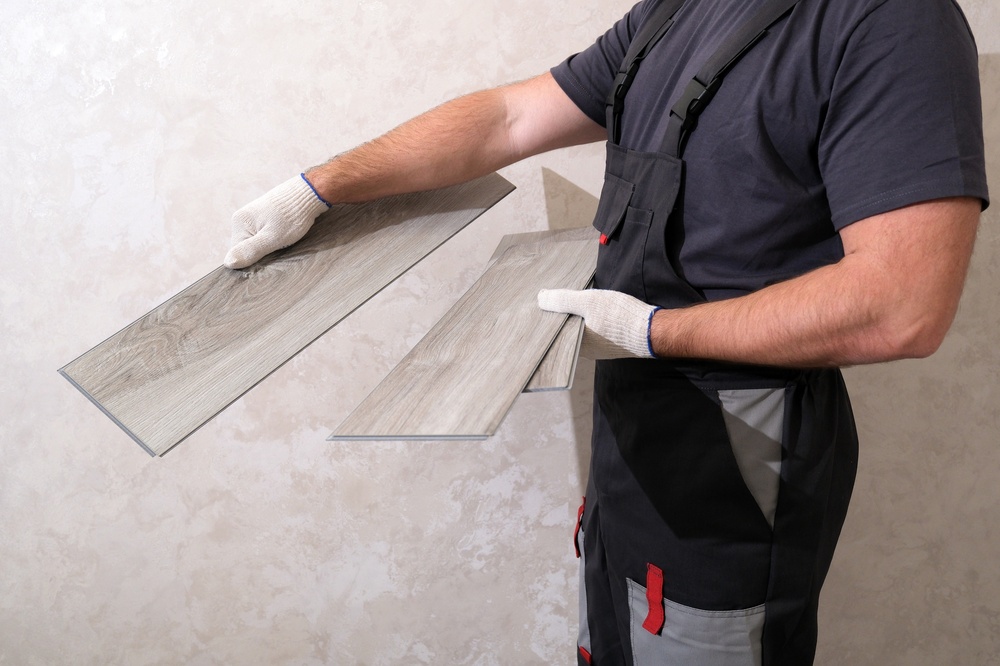
For renovation projects where subfloor conditions are uncertain, the floating click-lock installation method of most SPC products is a major practical advantage. SPC’s rigidity means it bridges minor subfloor imperfections better than flexible vinyl, reducing the amount of subfloor leveling work needed before installation.
Iowa basements face real moisture challenges. Fully waterproof SPC LVP is the correct choice — not engineered hardwood, not laminate, not flexible LVP with a wood core. Specify a product with a waterproof SPC core and attached underlayment, and ensure the subfloor is clean and level before installation.
For builders and developers across Des Moines, Ankeny, Waukee, West Des Moines, Urbandale, and surrounding Central Iowa communities, we offer:
Our clients, including multifamily developers and general contractors on projects like Glynn Village Townhomes in Waukee and Pickett Fence Communities in West Des Moines, consistently tell us that working from a coordinated package eliminates the supply chain chaos that derails so many builds.
How you source LVP matters as much as which product you choose. For small projects, big-box retail works. For new construction builds and multifamily developments, sourcing through a building materials supplier who understands construction timelines and can coordinate volume orders makes a significant difference in cost, consistency, and schedule.
What to look for in an LVP supplier for Iowa construction projects:
• Local relationship and accountability — if there’s a quality issue or a shortage, you need a supplier who will solve it, not forward you to a 1-800 number
“I’ve worked with a lot of suppliers, but KYADTA stands out. They actually understand the construction side, which means they think ahead and solve problems before they start. The communication and follow-through are top notch.” — C.N., General Contractor
At KYADTA Building Supplies, we work with builders and developers across Des Moines, Ankeny, Waukee, West Des Moines, Urbandale, and surrounding Central Iowa communities to source LVP and other finish materials as part of fully coordinated material packages. Our 25+ years of construction experience means we help clients specify the right product tier for each project type, not just the lowest price point.
For new construction projects in Des Moines and Central Iowa, a rigid SPC core LVP with a 20-mil wear layer is the standard recommendation. It delivers the best balance of durability, waterproofing, and stability for Iowa’s temperature fluctuations. Mid-range products in the $2.50 to $4.50 per square foot range (materials only) hit the quality threshold that builders and buyers expect in today’s market.
SPC (Stone Plastic Composite) has a dense limestone-and-PVC core that is extremely rigid, waterproof, and dent-resistant. WPC (Wood Plastic Composite) has a foamed wood-fiber core that is softer and warmer underfoot. SPC is the default choice for Iowa new construction, rental units, and basements. WPC works well in bedrooms and comfort-focused spaces, or in multistory buildings where sound transmission between floors is a concern.
Total installed cost for vinyl plank flooring in Des Moines in 2026 ranges from $4.06 to $11.32 per square foot, depending on product tier, subfloor conditions, and whether old flooring needs to be removed. Most builders budgeting quality mid-range SPC projects plan for $5 to $8 per square foot installed. Material costs alone run $1.50 to $7.00 per square foot depending on tier, core type, and wear layer.
KYADTA Building Supplies partners with builders and developers across Des Moines and Central Iowa to deliver accurate material packages, competitive pricing, and reliable lead times, so your projects stay on schedule and on budget from day one.
Yes, SPC-core LVP is one of the best flooring options for Iowa basements specifically because it is 100% waterproof, dimensionally stable in temperature swings, and sits lower in profile than some alternatives, leaving more ceiling height. Avoid laminate, engineered hardwood, or flexible vinyl in Iowa basements, they are not sufficiently waterproof for the moisture conditions common in Iowa below-grade spaces.
KYADTA Building Supplies works with developers and general contractors across Des Moines, Ankeny, Waukee, West Des Moines, and all of Central Iowa to supply LVP and finish materials as part of coordinated material packages. We provide volume pricing, dye-lot consistency across large orders, and delivery scheduling aligned to your construction timeline. Contact us at kyadta.com or call (515) 963-0842 to discuss your project.
Choosing vinyl plank flooring for a new build, rental development, or renovation comes down to matching the right product tier, core type, and wear layer to the specific demands of each space. Get that decision right at the start and you avoid callbacks, reduce long-term replacement costs, and deliver a finished product that owners and tenants appreciate.
KYADTA Building Supplies partners with builders, contractors, and developers across Central Iowa to source LVP and all finish materials as part of fully coordinated, accurately quoted material packages. Whether you are finishing one home or specifying flooring across a 60-unit community, we help you build smarter from the start.
Contact KYADTA to source LVP and finish materials for your next Iowa project:

KYADTA Building Supplies, LLC partners with developers, builders, and contractors nationwide to deliver high-quality building materials tailored to your project’s design, budget, and timeline. From countertops, flooring, and cabinets to lighting, trim, and fixtures, our turnkey design packages and custom product solutions help you build smarter. With 25+ years of construction experience, we provide trusted brands, competitive pricing, and accurate, value-driven material packages. Family-owned and fully insured, we stand behind every product and promise to help bring your vision to life, on time and on budget