Why Building a New Home in Iowa Costs More Than Most Buyers Expect and What Actually Drives the Price
You found a floor plan you love. The builder’s website says base pricing starts at $350,000. You do the math, feel like it might work, and then you sit down for the full estimate.
By the time the conversation is over, you are looking at $480,000 before lot and land. Maybe higher.
If you have been through that meeting, you know the feeling. You came in with a number in your head and left with a completely different one, and nobody could really explain where the difference came from.
This post is going to walk you through it. We are going to break down what actually makes Iowa new construction cost what it costs in 2026, which parts of that number are tied to factors you cannot change, and which ones Iowa home buyers can actually influence. We work with builders across Des Moines and central Iowa at KYADTA Building Supplies, and we see both sides of this conversation every week.
What Iowa Home Buyers Are Actually Paying For
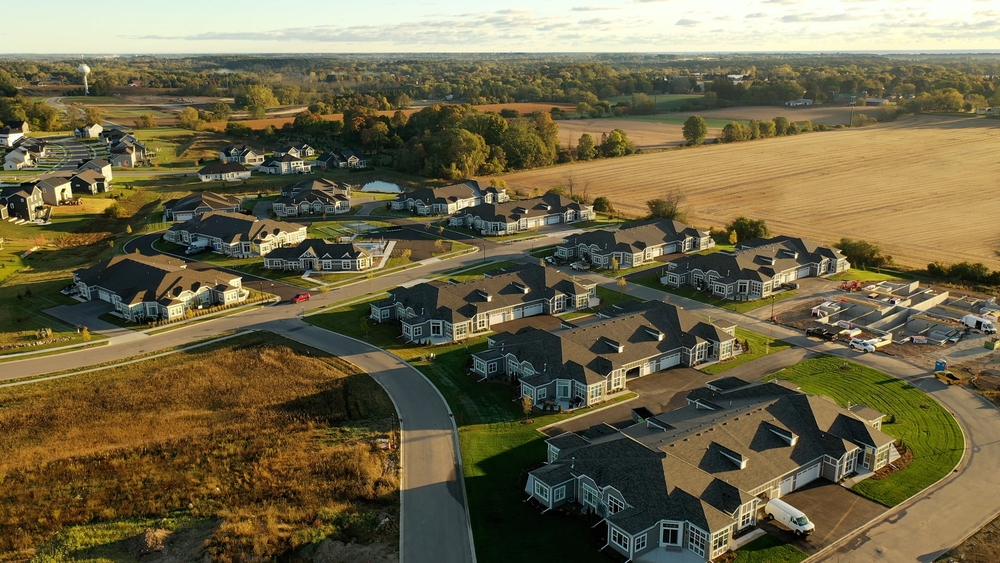
The sticker price on a new construction home is not one cost. It is eight or nine separate cost categories bundled into a single number, and most buyers only understand one or two of them. Here is what HomeGuide’s 2026 Iowa build cost research shows for a typical Iowa new construction build:
- Foundation: $25,000 to $70,000
- Framing: $35,000 to $75,000
- Roofing: $10,000 to $25,000
- Siding and exterior: $12,000 to $45,000
- Windows and doors: $16,000 to $50,000
- Electrical: $12,000 to $20,000
- Plumbing: $12,000 to $20,000
- HVAC: $8,000 to $18,000
- Insulation and drywall: $12,000 to $40,000
- Interior finishes and fixtures: $75,000 to $250,000+
Then add land at $30,000 to $100,000+ for a residential lot near Des Moines, pre-construction fees, permits, and the general contractor’s margin of 10 to 20 percent. Today’s Homeowner’s Iowa data puts overall new construction between $107 and $294 per square foot for mid-range builds, which means a 2,000 square foot Iowa home runs $214,000 to $588,000 before land, and that range tells you a lot about how wide the variables are.
The category that swallows the most money and gives buyers the least control is interior finishes and fixtures. The category that gives buyers the most influence is also interior finishes. That is not a contradiction, it means your choices inside the home matter more than almost anything else for the final price.
The Iowa-Specific Factors That Push Costs Higher Than Other States
Iowa is not a cheap state to build in, and the reasons are specific. If you have ever wondered why similar floor plans cost more in Des Moines than what you see quoted online for other states, these are the factors driving that difference.
Iowa's frost line requires deeper foundations
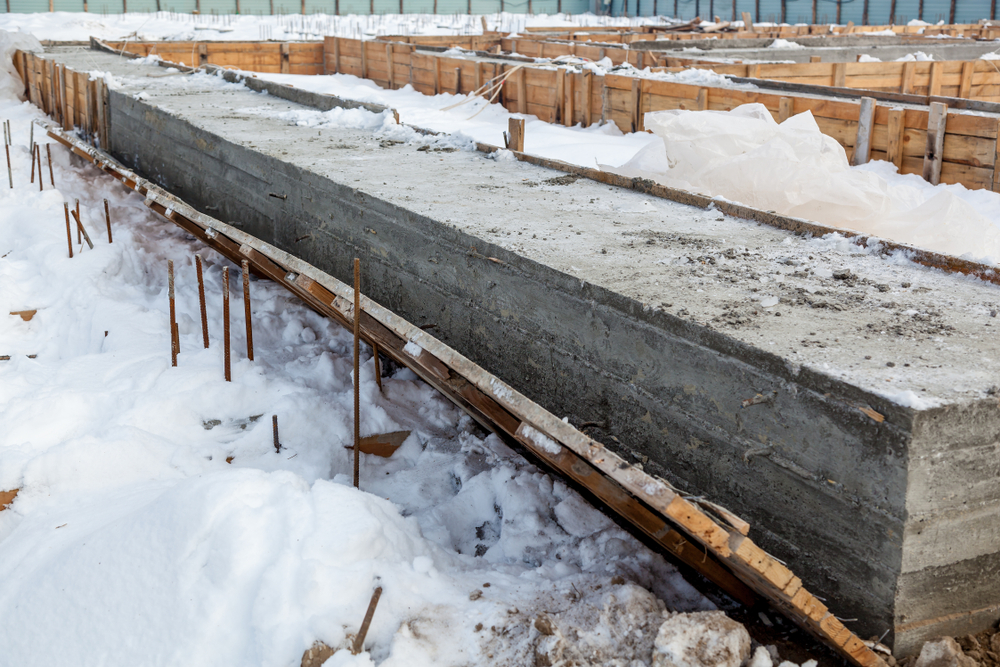
Iowa’s frost line runs 42 to 60 inches deep depending on location. That means every new construction foundation has to go deep enough to prevent frost heave — the ground movement that happens when moisture freezes and expands below the slab. Basement foundations are standard here for that reason, and basements cost significantly more than slab-on-grade. This is not optional. It is a building code reality specific to Iowa’s climate zone.
Clay soil demands extra foundation and drainage work
A large portion of central Iowa, including much of the Des Moines metro, sits on expansive clay soil. Clay absorbs moisture and swells, then contracts and cracks when it dries. Foundations built on clay need more robust design, proper drainage systems, and in some cases soil treatment. That adds cost before a single wall goes up.
Wind load requirements reflect tornado country
Iowa sits in a region where framing has to handle severe thunderstorm winds and tornado risk. Building codes here require framing specifications that add material and labor cost compared to states with calmer wind profiles. Your roof structure, wall sheathing, and connection hardware are all specified to meet these standards.
Energy requirements for Iowa winters
Iowa’s cold winters, with temperatures regularly below zero, require higher insulation R-values, insulated plumbing, and HVAC systems sized for extreme cold. Triple-pane windows are becoming increasingly common in Iowa new construction because they pay back in energy savings. All of that is cost you are paying upfront that other states in warmer climates simply do not face. We covered this in more detail in our post on material upgrades worth paying for in Iowa new construction.
Labor Is the Cost That Shocks Most Iowa Home Buyers
Of the total construction budget for an Iowa new home, labor represents roughly 40 to 50 percent. On a $450,000 build (excluding land), that is $180,000 to $225,000 in labor alone. And labor costs in Iowa have risen sharply over the past three years.
The Iowa construction industry is facing a real skilled labor shortage. Framing crews, electricians, plumbers, HVAC technicians, and finish carpenters are in high demand and short supply, particularly in the Des Moines metro. Iowa Public Radio’s 2026 reporting on housing affordability identified labor availability as one of the key structural barriers to building affordable new homes in central Iowa.
What this means for you as a buyer: you cannot negotiate labor costs the way you might negotiate material costs. A builder cannot hand you a cheaper framing crew. The labor market sets that rate. What you can do is understand that labor cost is a real, fixed component of your price, and stop looking for ways to get it back through material cuts that will hurt you long-term.
Materials Are Where Iowa Home Buyers Have the Most Influence
Materials account for 50 to 60 percent of a new home’s construction cost before the general contractor’s margin. On a $450,000 build, that is $225,000 to $270,000 in materials. This is the part of the price where buyer decisions, and builder relationships with suppliers, genuinely matter.
The most common mistake Iowa buyers make is either upgrading everything without understanding the value, or accepting every base material without knowing what it is. We wrote a full breakdown of which builder grade materials are worth upgrading in Iowa new construction last month, and the short version is: siding, flooring, and countertops are where your upgrade dollars do the most work. Light fixtures, hardware, and paint are better handled after closing.
The second thing that matters is your builder’s supplier relationships. A builder who sources from a local, established supplier, versus whoever has the lowest quote that week, gives you more predictable material quality and pricing. When a material package is built correctly for your build, your allowances reflect what materials actually cost today, not what they cost two years ago when the builder last updated their base pricing.
Where material allowances hide the real cost
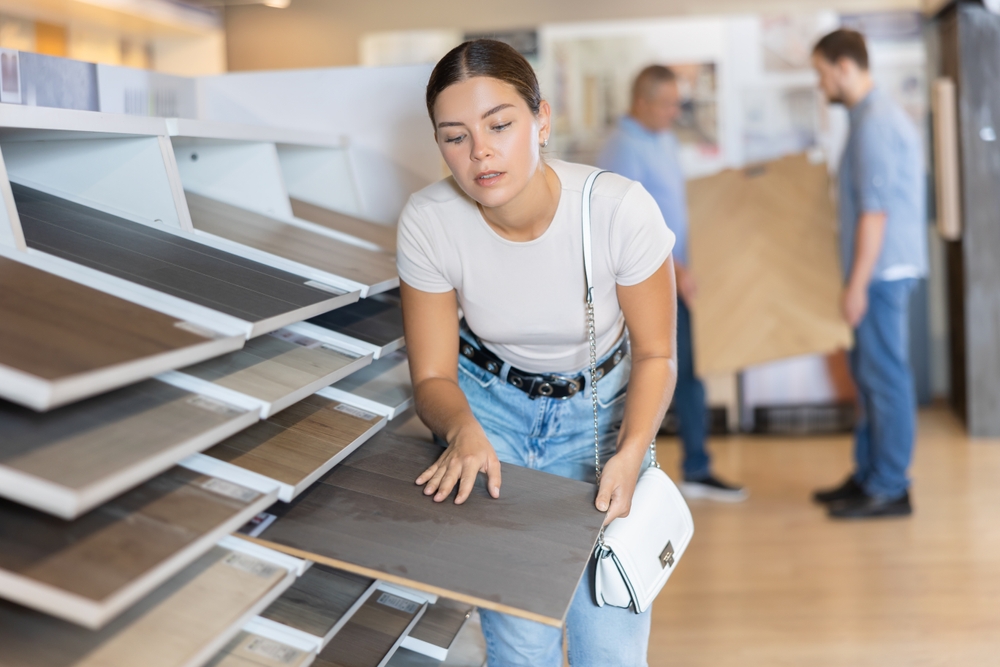
The allowance line on your contract is one of the most important things to scrutinize as an Iowa home buyer. Builders set flooring allowances, cabinet allowances, and countertop allowances based on what they budgeted — which may or may not reflect current supplier pricing.
A flooring allowance of $3.50 per square foot sounds fine until you realize that mid-grade LVP flooring in Des Moines runs $4.50 to $7.00 per square foot installed right now. A cabinet allowance of $12,000 for a 200-square-foot kitchen may cover stock cabinets from a big-box retailer but not the semi-custom cabinets your floor plan deserves. And a countertop allowance that does not include quartz as a realistic option is an allowance you will blow through the moment you see your first slab.
Ask your builder specifically: which supplier are these allowances based on, and can you show me current pricing? If the allowance and the current pricing do not match, you are looking at an out-of-pocket gap that belongs in your total budget calculation now.
What You Actually Cannot Change No Matter What
Some of the cost in an Iowa new construction home is simply not negotiable. Understanding what is fixed helps you stop spending energy trying to claw it back through upgrades you will regret.
- Land: lot pricing in the Des Moines metro reflects supply and demand. Premium lots near good school districts or established neighborhoods cost what they cost.
- Permits and fees: Iowa building permits typically run $1,000 to $5,000+, and those fees reflect your local municipality’s requirements.
- Foundation: the depth and type of foundation Iowa’s climate and soil require is not optional. Do not let a builder cut corners here.
- Code-required framing: wind load requirements, fire blocking, structural connections — these are code minimums, not upsells.
- Utility connections: running water, sewer, electrical, and gas to a new lot has a hard cost that depends on distance and local infrastructure.
These fixed costs often add up to $80,000 to $150,000 before a single interior decision is made. If you are trying to understand why a 2,000 square foot home that feels like it should cost $300,000 is actually $480,000, the land, foundation, utilities, framing, and permits are a significant part of that gap.
The Des Moines Market Reality in 2026
Des Moines new construction is not getting cheaper. Iowa Realtors market trend data shows consistent pressure on new construction pricing from land scarcity in established neighborhoods, rising labor costs, and ongoing material price volatility.
The comparison that matters most for buyers deciding whether to build or buy: a detailed build vs. buy comparison for the Des Moines metro shows that buying an existing home is typically less expensive upfront, but building gives you control over materials, layout, and energy efficiency that resale homes simply cannot match.
What building gives you that buying does not: you choose what goes into the walls. That means you get the insulation R-value you want. You get the siding that holds up to Iowa weather. You get the flooring that fits how your family actually lives. When you buy an existing home, you inherit someone else’s material decisions from 10 or 15 years ago, and pay to update them later.
The builders doing the most transparent job of explaining this are the ones who are upfront about what their base pricing includes and what it does not. See what material options are available from KYADTA for local Iowa builds, knowing current supplier pricing gives you a baseline to evaluate what your builder is quoting.
How to Use This Information When Talking to Iowa Builders
Walking into a builder conversation with a clearer picture of costs changes the dynamic. Here is how to use this information:
- Ask the builder to break out the estimate by category. If they cannot show you a cost breakdown by labor vs. materials vs. overhead vs. margin, ask for it. Reputable builders in Iowa can provide this.
- Review every material allowance against current local supplier pricing. KYADTA publishes current pricing on our products page, so you can cross-reference what your builder is quoting against what the materials actually cost today.
- Understand what material packages cover in your specific build. A well-structured material package should account for flooring, cabinets, countertops, and siding as one coordinated budget, not four separate surprise conversations.
- Do not assume all savings come from cutting materials. Going with a cheaper siding product to hit a number now is a decision you will revisit in 8 to 12 years when Iowa weather catches up to it.
- If a builder says a cost is non-negotiable, ask which part is code-required and which part is their standard practice. Sometimes “standard” means required. Sometimes it means they have always done it that way and a different approach is available.
The Real Question Iowa Home Buyers Should Be Asking
Most buyers come into the new construction process asking “how do we get the price down?” The better question is “what is this price actually buying me?”
A $480,000 build with high-quality siding, proper insulation, mid-grade LVP throughout, and quartz countertops is a different 20-year investment than a $430,000 build with base materials across the board. The research on what Iowa home buyers actually want consistently shows that durability and low maintenance outrank initial price as long-term priorities, but the purchase decision often gets made on initial price because that is the number that shows up on the contract.

The gap between what you pay for a new home and what that home costs you over 10 to 20 years is where the real financial decision lives. Cheaper materials that need replacement, energy costs from inadequate insulation, or siding that needs repainting every 5 years, those are costs that do not show up on closing day but absolutely show up over time.
KYADTA’s role in this is simple. We supply the materials that go into Iowa new construction, flooring, cabinets, countertops, siding, and we know what those materials cost right now, what they perform like in Iowa conditions, and which choices hold up over time. We are a resource Iowa home buyers can use to pressure-test what their builder is telling them.
Frequently Asked Questions
Why do new construction homes in Iowa cost so much more than they used to?
Three main factors: labor costs have risen significantly in Iowa due to skilled worker shortages in the construction trades; material costs remain elevated from supply chain disruptions that began in 2020 and have not fully normalized; and land in desirable Iowa markets, particularly the Des Moines metro, has become more scarce. These factors compound, higher labor and materials on a more expensive lot produce a meaningfully higher final price than buyers who last looked at the market five years ago are expecting.
What percentage of a new Iowa home's cost is materials versus labor?
According to HomeGuide’s Iowa construction data, materials account for roughly 50 to 60 percent of a new home’s construction budget, with labor making up 40 to 50 percent. On a $450,000 build (excluding land), that translates to approximately $225,000 to $270,000 in materials and $180,000 to $225,000 in labor. The general contractor’s margin of 10 to 20 percent is typically calculated on top of the combined total.
Can Iowa home buyers negotiate the price of new construction?
Yes, but not on everything. Labor rates, code-required foundation work, permits, and utility connections have limited flexibility. The areas where buyers have the most influence are material selections (within the allowance structure), the timing of upgrades, and the scope of optional features. Understanding what is truly fixed versus what is a builder default helps you focus your negotiation on the right areas.
Do Iowa-specific factors genuinely add cost compared to other states?
Yes, meaningfully. Iowa’s 42 to 60 inch frost line requires basement or deep foundation construction that states with mild winters do not need. Expansive clay soil in central Iowa requires additional foundation design. Wind load requirements for Iowa’s storm and tornado risk add framing specification costs. And cold winter energy requirements mean more insulation, better windows, and larger HVAC systems than comparable homes in warmer states. These are real, unavoidable cost factors.
How do material allowances affect the final price of a new Iowa home?
Allowances are the dollar amounts a builder sets aside for specific material categories, flooring, cabinets, countertops, in the base contract. If current market pricing for those materials exceeds the allowance, you pay the difference as a change order. Because material pricing changes frequently, allowances set in a builder’s base package may not reflect what things actually cost at the time you are selecting finishes. Always ask your builder which supplier their allowances are based on, and cross-reference against current local pricing before signing.
Get a Clear Picture Before You Commit to a Build
Iowa home buyers who understand what drives construction pricing make better decisions at the contract stage, and avoid the surprises that hit after signing. KYADTA Building Supplies serves builders and buyers across Des Moines and central Iowa, and we are happy to walk through current material pricing with any buyer who wants a realistic baseline before their builder conversations.
Whether you are comparing flooring allowances, trying to understand what a siding upgrade actually costs, or just trying to make sense of an estimate that seems too high, reach out to our team. We know the local market, we know current pricing, and we know which material decisions will serve you well in an Iowa home for the next 20 years.
You can also explore our full product catalog to see what is available locally and what options your builder should have access to. And for a breakdown of which specific materials are worth upgrading in an Iowa new construction home, read our post on builder grade materials and upgrades for Iowa home buyers.

KYADTA Building Supplies, LLC partners with developers, builders, and contractors nationwide to deliver high-quality building materials tailored to your project’s design, budget, and timeline. From countertops, flooring, and cabinets to lighting, trim, and fixtures, our turnkey design packages and custom product solutions help you build smarter. With 25+ years of construction experience, we provide trusted brands, competitive pricing, and accurate, value-driven material packages. Family-owned and fully insured, we stand behind every product and promise to help bring your vision to life, on time and on budget